

The moment you decide to buy your first home marks a significant milestone. It’s exciting, nerve-wracking, and filled with questions. How do you ensure you’re making the right choice? What pitfalls should you avoid? Let’s navigate this journey together with practical wisdom.
Starting With Self-Assessment
Before exploring properties, take an honest inventory of your needs. Social media showcases dream homes, but your first property should align with your actual lifestyle, not aspirational images.
Consider your daily reality. If your workplace is in Whitefield’s technology hub, does it make sense to buy in a distant suburb, adding hours to your commute? Perhaps a well-located 2 BHK near your office offers more value than a larger apartment requiring significant travel time.
Think about your five-year plan. Are children part of the picture? Do aging parents need nearby accommodation? These factors determine whether a compact 2 BHK or a more spacious configuration suits your situation.
Location Trumps Everything
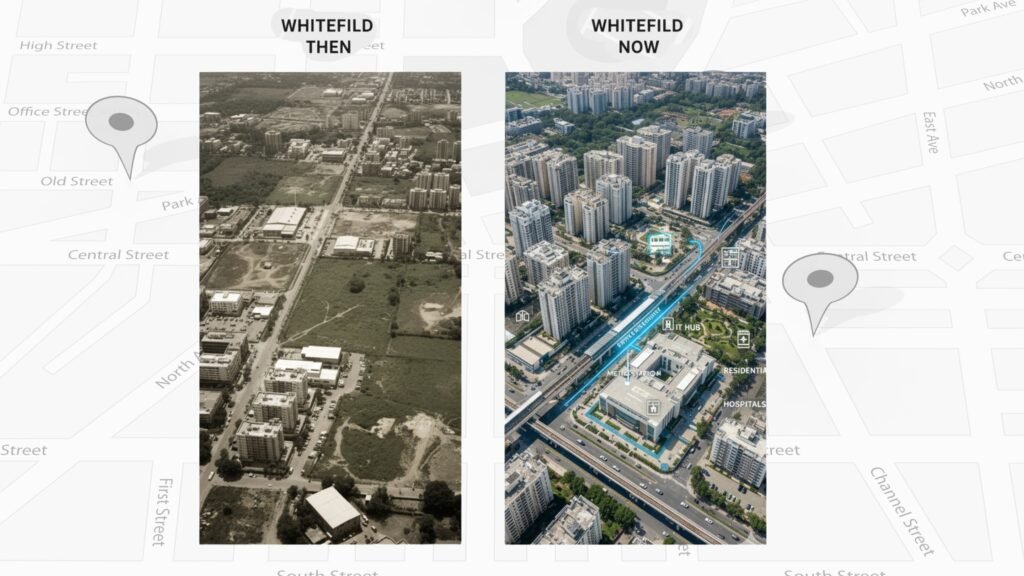
Property experts emphasize one unchangeable factor: location. You can renovate interiors, upgrade fixtures, and repaint walls, but you cannot relocate your building.
Priority considerations include healthcare access, educational institutions, and neighborhood development trajectory. East Bangalore areas like Whitefield, Hoskote, and Kadugodi exemplify regions that have matured significantly. The Peripheral Ring Road expansion, metro connectivity improvements, and IT sector concentration have transformed these localities.
Within developed areas, micro-location matters enormously. Nallurahalli, for instance, offers Whitefield’s advantages—proximity to tech parks, hospitals, and schools—without the central area’s congestion. First-time buyers benefit from established infrastructure rather than speculating on future development.
Financial Reality Beyond Brochure Prices
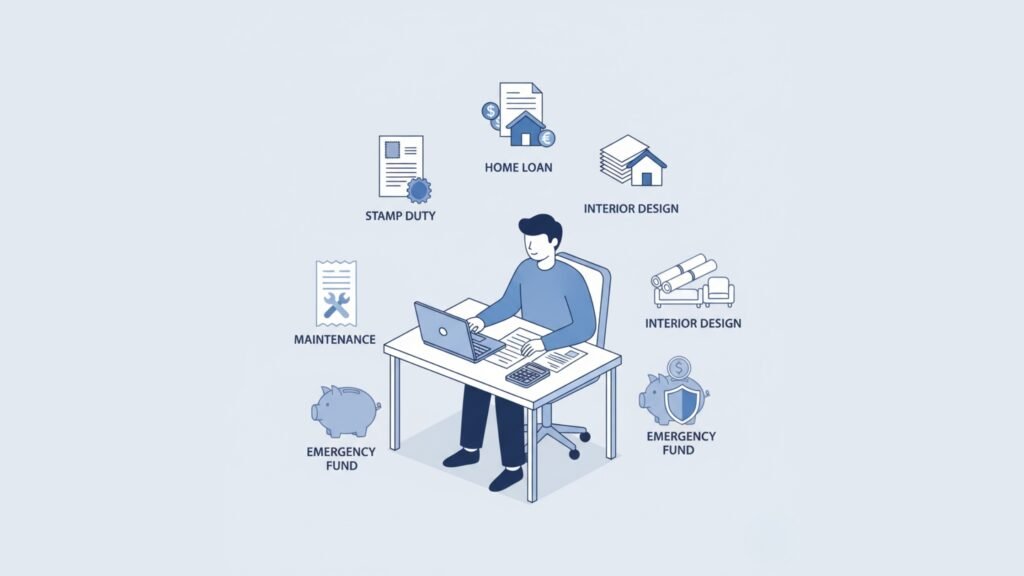
The advertised property price represents just one component of your total investment. Karnataka’s stamp duty and registration fees add approximately 7-8% to costs. Factor in loan processing charges, insurance, interior work, maintenance deposits, and crucially, a six-month emergency fund.
Financial advisors recommend limiting your EMI to 40% of monthly income. Exceeding this threshold transforms homeownership from achievement to burden.
Configuration flexibility matters here. If a 3 BHK strains your budget but you need more than a standard 2 BHK, consider a 2.5 BHK—essentially a two-bedroom unit with a smaller third space perfect for a home office or nursery. This middle-ground option, when available, deserves serious consideration.
Navigating Home Loans Strategically
Loan approval differs significantly from securing favorable loan terms. Interest rate variations, even 0.25%, compound into substantial amounts over 20 years.
Maintain a credit score above 750 for optimal rates. Seek pre-approval to understand your realistic budget before property hunting. Compare offerings from multiple banks despite the tedium—it’s worthwhile over two decades of repayment.
Properties in established projects with strong builder credentials and proper RERA registration typically receive faster loan approvals at better rates, as banks perceive lower risk.
For comprehensive guidance on loan eligibility, documentation, and comparing lending options, professional consultation proves invaluable. Resources like Diligent Consulting offer structured support through the financing maze, ensuring you secure terms aligned with your financial capacity.
Under-Construction vs. Ready-to-Move Properties
This choice depends on your timeline and circumstances. Under-construction properties cost 10-20% less but require patience and flexibility with possession dates. They suit buyers planning 2-3 years ahead who can comfortably continue renting.
Ready-to-move properties command premium pricing but deliver certainty. You inspect exactly what you’re purchasing and can transition immediately. If you’re paying substantial rent—say ₹25,000 monthly in Whitefield—redirecting that toward an EMI makes ready-to-move properties financially sensible despite higher initial costs.
RERA: Your Protection Framework
The Real Estate Regulatory Authority provides essential safeguards. RERA ensures builders cannot advertise fictitious amenities, mandates that 70% of funds go toward actual construction, and establishes clear recourse mechanisms.
Verify RERA registration before any financial commitment. Reputable developers share these details proactively. Absence of RERA information signals concern.
Configuration Selection Framework
The 2 BHK versus 3 BHK decision keeps many buyers awake. Apply this framework:
Choose 2 BHK if you’re single or a couple without immediate family expansion plans, need home office space, prefer lower EMIs, or prioritize maintenance affordability.
Select 3 BHK when children are planned soon, you regularly host extended family, require dedicated work-from-home space plus guest accommodation, or envision staying 10+ years without upgrading.
The 2.5 BHK configuration bridges this gap effectively for couples planning families within a few years but facing budget constraints with standard 3 BHK units.
Property Visit Essentials
Model apartments showcase aspirational living, not functionality. Your site visit should investigate practical matters.
Test water pressure with multiple taps running simultaneously. Check mobile network strength by making actual calls. Assess natural lighting during daytime visits. Evaluate sound insulation if possible. Verify the real view, not brochure photography. Inspect common area maintenance quality.
Speak with existing residents in ready properties—they provide unfiltered insights about water supply reliability, power backup adequacy, and management responsiveness.
Critical Warning Signs
Certain red flags demand walking away regardless of attractive pricing: unclear RERA registration, vague possession timelines, unrealistic pricing, aggressive sales tactics, absence of completed projects, land ownership disputes, or reluctance to show construction sites.
Trust your instincts. Legitimate consultants encourage healthy skepticism rather than dismissing concerns.
Making Your Decision
No perfect buying moment exists. Markets fluctuate, rates change, prices move. However, conditions favor purchasing when you have employment stability, 20-25% saved for the property cost, plan on staying locally 5-7 years, found a property meeting most requirements, and the EMI plus maintenance feels manageable.
Your first home needn’t be your permanent home. It should be a strategic stepping stone that appreciates reasonably, serves immediate needs, and avoids becoming financially oppressive.
Professional Support Value
The real estate market’s complexity challenges first-time buyers. Working with consultants who provide end-to-end support—from property identification through loan assistance to interior planning—transforms the experience. Quality guidance asks difficult questions about true affordability and resale potential rather than simply pushing commissionable properties.
When you finally hold those keys and step into your first owned space, the journey’s stress will have been worthwhile. Your first home awaits—approach it informed, prepared, and confident.